We've all seen them. Those legal thrillers or crime shows where the hero just can't find the one single detail that ties everything all together. And then they go to the library, sit down at a public computer, open up a search engine and, after a few quick keystrokes, find the answer that leads them to the villain, the secret lair, the unknown weakness and the pot-o-gold at the end of the rainbow. But research is rarely that easy.
I just finished the first draft for personal essay/memoir kind of thing. Although it's mostly based on things that happened to me, there are a couple of fine details I want to research and nail down before I even think about sending this thing out. One of them being the date of a concert I went to in the mid 1990's. I know the year. And it was snowing that night, so I know it was sometime between November and March. But beyond that I really don't remember.
So I spent a couple of hours digging through the electronic databases at work, accessing The Washington Post as well as some more local papers, looking for any mention of the specific concert tour. It wasn't a major stadium tour, but at the 9:30 Club in D.C. Not the current super-warehouse space, but the old, dingy bar near the Metro Center metro stop (oh how I miss that dirty place). I couldn’t find anything, so it became apparent that it wasn't a show Mark Jenkins or one of the other critics reviewed. But I thought I'd still find it listed in an events guide in old weekend sections or something. But the databases don't seem to capture any of that stuff----just the actual articles. In the end, I think I'll have to trek out to the one library in my library system that still has old issues of The Washington Post on microfiche, and go through the weekend sections week-by-week until I find what I need.
I was at writing conference once and heard Karey Joy Fowler talk about her process and how one of the greatest tools for her in writing historical fiction is going through the advertisements and personal ads to get a sense of the language, what people bought, ate and did for fun. Details like that are still getting left out with most of our digital tools. It just points out to me some of the limitations of using digital sources for research. They can be a wonderful time saver if they have what you want, but for those pieces that are a little more esoteric----and those are often the pieces that are the most fun-----you still have to get your hands dirty flipping through physical newspapers, magazines and microfiche.
Excelsior
Showing posts with label Writing. Show all posts
Showing posts with label Writing. Show all posts
Saturday, May 28, 2011


Thursday, October 22, 2009
What's Up, Google Docs!
I've been doing a lot of research lately for a number of writing projects, but things often get waylaid when the wife usurps the laptop. My normal research process is to bury myself in a subject; I read, read read and take notes on the computer as I go. Whether I'm looking up biographical details about the jazz musician Sun Ra or exploring different ways to describe what happens when an object falls into a black hole, it's a method that works for me so I can get those odd, salient details into a piece.
Even though it's our laptop now, it was my laptop before we got married. So most of my writing files are on there and, frankly, I'm just used to keeping them there. And while we have a desktop computer as well the laptop is often just the most convenient one to jump onto.
Walking the dog tonight, a solution occurred to me: google docs. I've used it before for group coursework in library school and even for some projects I've worked on for YALSA. But never just for myself. Surprising I never thought of it before now, because it is so damn easy to use. Either upload your documents or work on it right there in the web-browser. The beauty of it is, I'll be able to save my work no matter what computer I use. Hell, I can even work on some things during my lunch time or other slow moments at work. I know, I know. This sounds like my account's been hacked by google...so to be fair, I know there are other document-sharing programs out there. This is just the one I've used and know how to use.
So, thanks to google docs, I have no more excuses for not writing. At least so long as we have at least two computers in our home. I guess I better get back to it.
Excelsior
Even though it's our laptop now, it was my laptop before we got married. So most of my writing files are on there and, frankly, I'm just used to keeping them there. And while we have a desktop computer as well the laptop is often just the most convenient one to jump onto.
Walking the dog tonight, a solution occurred to me: google docs. I've used it before for group coursework in library school and even for some projects I've worked on for YALSA. But never just for myself. Surprising I never thought of it before now, because it is so damn easy to use. Either upload your documents or work on it right there in the web-browser. The beauty of it is, I'll be able to save my work no matter what computer I use. Hell, I can even work on some things during my lunch time or other slow moments at work. I know, I know. This sounds like my account's been hacked by google...so to be fair, I know there are other document-sharing programs out there. This is just the one I've used and know how to use.
So, thanks to google docs, I have no more excuses for not writing. At least so long as we have at least two computers in our home. I guess I better get back to it.
Excelsior
Tuesday, December 02, 2008
NaNoUpDate
By NaNoWriMo's standards, I was a success this past month. I ended up with 52,580 words, just over the bottom limit for what they consider a "novel".
Skimming through things this morning, I saw lots of great moments: an origin, fun little battles, and making new friends and enemies everywhere he went. But the whole doesn't really add up to anything. I guess that shouldn't surprise me. Writing this way, where word count trumps everything else, doesn't really leave much time for editing or reflecting. Just go, go, go ninja boy. And overarching plots have never been my strong suit.
Now I guess the real work begins. Playing with it, developing it and seeing if it can be transformed from a pile of nonsensical scenes into a coherent story. Miss L and I are still talking about doing it as a webcomic. I think I'll start with his origin tale and see where adapting that takes us. It's a concrete mini-storyline with good guys, bad guys, an obvious conflict and would probably take up about the same space as your standard monthly comic book. We'll see what happens.
Excelsior
Skimming through things this morning, I saw lots of great moments: an origin, fun little battles, and making new friends and enemies everywhere he went. But the whole doesn't really add up to anything. I guess that shouldn't surprise me. Writing this way, where word count trumps everything else, doesn't really leave much time for editing or reflecting. Just go, go, go ninja boy. And overarching plots have never been my strong suit.
Now I guess the real work begins. Playing with it, developing it and seeing if it can be transformed from a pile of nonsensical scenes into a coherent story. Miss L and I are still talking about doing it as a webcomic. I think I'll start with his origin tale and see where adapting that takes us. It's a concrete mini-storyline with good guys, bad guys, an obvious conflict and would probably take up about the same space as your standard monthly comic book. We'll see what happens.
Excelsior
Friday, November 21, 2008
Me and Catherine Jinks
I've been reading little but young adult books the last three weeks for three main reasons. They tend to be short, fast reads. They are almost always fun. And the disjointed mess I'm writing this year for NanoWriMo is probably best described as Young Adult and I felt like it would help keep me going (it has).
I've read a lot of good ones. The political parable After by Francine Prose. The surprisingly complex dark fantasy Sabriel by Garth Nix. But the one that's been sticking with me the most is the one I expected the least out of: Pagan's Crusade by Australian Catherine Jinks. Not because I thought it would be bad, but because I don't often go for historic fiction. Set in Jerusalem during the Crusades, the book focuses on Pagan, a young man who tries to escape his gambling debts by becoming a Squire for the Templars. Except for some of the battle scenes towards the end it's all pretty tongue-in-cheek and a pretty fun read. Here's the opening paragraph:
A big man in brown, sitting behind a table. Big hands. Big chest. Short and broad. Head like a rock, face scarred like a battleaxe. He looks up and sees---what's this? A street urchin? Whatever it is, it's trouble. Trouble advances cautiously.
I was hooked right away. The voice, the humor, the story...I loved it all. The more I read, the more I realized why I liked it so much.
Jinks writes like I do.
Short, focused sentences. Sentences designed to get the point across quickly and not waste time with flowery language. But every couple of pages she nail you with a piece of dialogue or a terrifyingly beautiful description, something that punches you in the gut and makes you stop and think for a moment.
Okay, to be fair I should probably say she writes like I try to write. Her work is considerably more polished than my own. While I see writers I admire and even love all the time, this is the first time I've come across one that seems to approach it in the same way I do. I know I'll continue with the Pagan series at some point soon, but in the meantime I've picked up her novel Evil Genius, a book that was hugely popular at my library this past summer. I'm eager to dig into it and see if her approach stays the same or if it differs book to book.
Until next time...
Excelsior
I've read a lot of good ones. The political parable After by Francine Prose. The surprisingly complex dark fantasy Sabriel by Garth Nix. But the one that's been sticking with me the most is the one I expected the least out of: Pagan's Crusade by Australian Catherine Jinks. Not because I thought it would be bad, but because I don't often go for historic fiction. Set in Jerusalem during the Crusades, the book focuses on Pagan, a young man who tries to escape his gambling debts by becoming a Squire for the Templars. Except for some of the battle scenes towards the end it's all pretty tongue-in-cheek and a pretty fun read. Here's the opening paragraph:
A big man in brown, sitting behind a table. Big hands. Big chest. Short and broad. Head like a rock, face scarred like a battleaxe. He looks up and sees---what's this? A street urchin? Whatever it is, it's trouble. Trouble advances cautiously.
I was hooked right away. The voice, the humor, the story...I loved it all. The more I read, the more I realized why I liked it so much.
Jinks writes like I do.
Short, focused sentences. Sentences designed to get the point across quickly and not waste time with flowery language. But every couple of pages she nail you with a piece of dialogue or a terrifyingly beautiful description, something that punches you in the gut and makes you stop and think for a moment.
Okay, to be fair I should probably say she writes like I try to write. Her work is considerably more polished than my own. While I see writers I admire and even love all the time, this is the first time I've come across one that seems to approach it in the same way I do. I know I'll continue with the Pagan series at some point soon, but in the meantime I've picked up her novel Evil Genius, a book that was hugely popular at my library this past summer. I'm eager to dig into it and see if her approach stays the same or if it differs book to book.
Until next time...
Excelsior
Saturday, November 15, 2008
Delany's About Writing: Good Writing vs. Talented Writing
The past couple of weeks I've been reading Samuel R. Delany's book About Writing, a book that collects a number of essays and letters that Delany wrote over the past 30 years on the subject of writing fiction. Although he first broaches it in his introduction, a concept Delany returns to again and again throughout the book is what he sees as the differences between good writing and talented writing.
Though they have things in common, good writing and talented writing are not the same (Delany, 4).
He goes on to define good writing as the basics of what we learn in English classes in High School and College: good grammar, avoiding passive voice, creating uncluttered sentence, varying sentence structure, precise word choice, etc. Good writing as he defines it is a skill, a learned craft that functions appropriately in writing forms like journalism, academic research papers, criticism, and---although Delany doesn't mention it---blogs.
Talented writing, on the other hand, uses those skills and rules and moves them into another realm. Delany says:
Good writing is clear. Talented writing is energetic (Delany, 6).
Good writing avoids errors. Talented writing makes things happen in the reader's mind---vividly, forcefully---...(Delany, 6).
Talented writing also "uses specifics and avoids generalities---generalities that his or her specifics suggest (Delany, 7). In other words, metaphors and symbols.
Delany continues by providing examples to show how talented writing uses lyrical phrases and powerful descriptions to deliver new insights to the reader. This form of writing, talented writing, is what's required to create fiction. Or, at least, fiction that stretches beyond simple entertainment and warrants thorough, careful, multiple readings.
It makes sense, though. Writing that really stops me, that forces me to read it more carefully and pay attention to what it's doing often comes through beautiful, precise descriptions and details. These details make you pause and visualize the world the author creates and even think about things in a new way. That level of writing is a very special. all too rare skill.
The good news is that while Delany indicates talented writing is more difficult to achieve, he at no point states that it can't be learned. Through careful reading of the masters, through thorough editing and a lot of hard work it's a skill that's possible to learn, although more difficult than learning how to create good writing.
I guess there's hope for me yet.
Excelsior
Though they have things in common, good writing and talented writing are not the same (Delany, 4).
He goes on to define good writing as the basics of what we learn in English classes in High School and College: good grammar, avoiding passive voice, creating uncluttered sentence, varying sentence structure, precise word choice, etc. Good writing as he defines it is a skill, a learned craft that functions appropriately in writing forms like journalism, academic research papers, criticism, and---although Delany doesn't mention it---blogs.
Talented writing, on the other hand, uses those skills and rules and moves them into another realm. Delany says:
Good writing is clear. Talented writing is energetic (Delany, 6).
Good writing avoids errors. Talented writing makes things happen in the reader's mind---vividly, forcefully---...(Delany, 6).
Talented writing also "uses specifics and avoids generalities---generalities that his or her specifics suggest (Delany, 7). In other words, metaphors and symbols.
Delany continues by providing examples to show how talented writing uses lyrical phrases and powerful descriptions to deliver new insights to the reader. This form of writing, talented writing, is what's required to create fiction. Or, at least, fiction that stretches beyond simple entertainment and warrants thorough, careful, multiple readings.
It makes sense, though. Writing that really stops me, that forces me to read it more carefully and pay attention to what it's doing often comes through beautiful, precise descriptions and details. These details make you pause and visualize the world the author creates and even think about things in a new way. That level of writing is a very special. all too rare skill.
The good news is that while Delany indicates talented writing is more difficult to achieve, he at no point states that it can't be learned. Through careful reading of the masters, through thorough editing and a lot of hard work it's a skill that's possible to learn, although more difficult than learning how to create good writing.
I guess there's hope for me yet.
Excelsior
Thursday, October 30, 2008
Prepping
I spent tonight prepping for NaNoWriMo, which starts just over 24 hours from now. Unfortunately, I have to write things by hand first. I don't know why, but it helps me in getting into the right mode. I spent probably more time than I should have picking out a notebook to use, but I wanted to go with something unique. I chose a notebook a friend of mine decorated and gave to me several years ago. I've been saving it for a special project, and this seems as good as any.
After work tonight I stopped off by my mom's house, where most of my books are still living. I picked up a few titles that might help me along the way. Samuel R. Delany's About Writing I plan on reading cover to cover while the writing prompts in Oulipo Conpendium, Lance Olsen's Rebel Yell and Jack Heffron's Idea Book I hope to use at those moments when I get stuck. I also grabbed some short story collections: the Complete works of Poe, Stranger Things Happen by Kelly Link and McSweeney's Mammoth Treasury of Thrilling Tales. Fun stuff, really, to give me mental breaks and help keep me going.
I've got my idea, vague though it may be. I've got my characters, as thin and translucent as they are. I don't know if this story will work or not, or if I even have it in me to write 5+ pages a day for 30 days straight. But I want to find out. I have to know if I can still tap into that undefinable something you hit when writing just starts to flow.
More once the writing commences.
Excelsior.
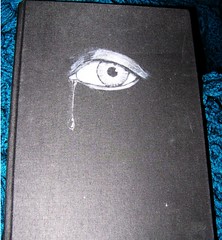
After work tonight I stopped off by my mom's house, where most of my books are still living. I picked up a few titles that might help me along the way. Samuel R. Delany's About Writing I plan on reading cover to cover while the writing prompts in Oulipo Conpendium, Lance Olsen's Rebel Yell and Jack Heffron's Idea Book I hope to use at those moments when I get stuck. I also grabbed some short story collections: the Complete works of Poe, Stranger Things Happen by Kelly Link and McSweeney's Mammoth Treasury of Thrilling Tales. Fun stuff, really, to give me mental breaks and help keep me going.
I've got my idea, vague though it may be. I've got my characters, as thin and translucent as they are. I don't know if this story will work or not, or if I even have it in me to write 5+ pages a day for 30 days straight. But I want to find out. I have to know if I can still tap into that undefinable something you hit when writing just starts to flow.
More once the writing commences.
Excelsior.
Saturday, June 28, 2008
A New Process
Creatively it's been a really good week for me. In my spare moments I've been working on the beginnings of the comic book project and I''ve been having a lot of fun with it. It will definitely be action oriented, but hopefully have some layers so it's not just action book.
It's a completely different experience, though, from how I normally write. My writing usually develops very organically. I start with a very vague concept and write a scene that explores it a bit. Then I start thinking about what has to happen before to lead up to that moment and what has to happen afterward, and write those scenes. Pieces start feeding into one another and after a time I have a full story. It makes for a slow process but it's the way I've always done it.
But I realized after the first talk Miss L and I had about the comic book project that this method wouldn't work. I needed to make my ideas more concrete before bringing them to her to illustrate them. I would even need to (shudder) outline.
So for now I've started simply, creating worksheets for major characters, jotting down ideas like how they look, what music they like, what they do when they get nervous or scared. And as I think about these pieces their backgrounds and their personalities start to fill in. And with it some of the plot points for the main story. There's a long way to go before Miss L will start getting pieces of the full arc----I don't know it yet myself----but for the first time in a long time I feel like I'm on the right track with a story. We'll see how I feel in a couple of weeks.
It's a completely different experience, though, from how I normally write. My writing usually develops very organically. I start with a very vague concept and write a scene that explores it a bit. Then I start thinking about what has to happen before to lead up to that moment and what has to happen afterward, and write those scenes. Pieces start feeding into one another and after a time I have a full story. It makes for a slow process but it's the way I've always done it.
But I realized after the first talk Miss L and I had about the comic book project that this method wouldn't work. I needed to make my ideas more concrete before bringing them to her to illustrate them. I would even need to (shudder) outline.
So for now I've started simply, creating worksheets for major characters, jotting down ideas like how they look, what music they like, what they do when they get nervous or scared. And as I think about these pieces their backgrounds and their personalities start to fill in. And with it some of the plot points for the main story. There's a long way to go before Miss L will start getting pieces of the full arc----I don't know it yet myself----but for the first time in a long time I feel like I'm on the right track with a story. We'll see how I feel in a couple of weeks.
Saturday, June 07, 2008
Synchronicity With Paper Weapons
I've had this fledgling idea in my head for months that I just haven't done anything with. The basic premise is a suburban high-school kid who thinks he's a highly trained ninja. I'm not sure yet how much is true and how much is in his head, but I think it's a story that could walk a fun line between real and imaginary and make all kinds of jokes and references to things I like.
Sitting in one of the webcomic panels at Balticon Miss L suggested working on the story together as a serial comic. She did a sketch and we've tossed around a couple more ideas.
Thursday I sat down and wrote a rough draft for a couple of scenes involving paper throwing stars. But while I appreciate the art of comics I really don't know how to write for comics, at least in the technical sense. How much do you write beyond the plot and dialogue? How detailed in descriptions do you get, and how much freedom do you give the artist? My only reference really is a book I read on Neil Gaiman, who's apparently a real stickler for detailing out how he wants every panel to look on the page.
So yesterday I went to the comic book section in my library with limited success. Not surprisingly most of the books focus on drawing and layout, but we did have one by Dennis O'Neil titled The DC Comics Guide to Writing Comics. I started flipping through it and what do I find but this:
Now I'm not particularly religious or even spiritual. But I do believe that sometimes the universe gives us little hints when were on the right track. This little paper shuriken is more than a little hint. I don't know where this project will go or if anyone other than Miss L and I will ever see it, but I'm more sure now that we need to give this story a shot and just see where our creativity takes us.
Excelsior.
Sitting in one of the webcomic panels at Balticon Miss L suggested working on the story together as a serial comic. She did a sketch and we've tossed around a couple more ideas.
Thursday I sat down and wrote a rough draft for a couple of scenes involving paper throwing stars. But while I appreciate the art of comics I really don't know how to write for comics, at least in the technical sense. How much do you write beyond the plot and dialogue? How detailed in descriptions do you get, and how much freedom do you give the artist? My only reference really is a book I read on Neil Gaiman, who's apparently a real stickler for detailing out how he wants every panel to look on the page.
So yesterday I went to the comic book section in my library with limited success. Not surprisingly most of the books focus on drawing and layout, but we did have one by Dennis O'Neil titled The DC Comics Guide to Writing Comics. I started flipping through it and what do I find but this:
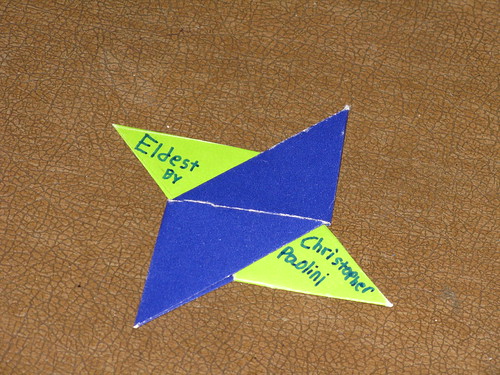
Now I'm not particularly religious or even spiritual. But I do believe that sometimes the universe gives us little hints when were on the right track. This little paper shuriken is more than a little hint. I don't know where this project will go or if anyone other than Miss L and I will ever see it, but I'm more sure now that we need to give this story a shot and just see where our creativity takes us.
Excelsior.
Saturday, August 04, 2007
Shameless Plug
This month's Harp Magazine has a nice review of the Hendrix-inspired anthology Kiss the Sky, edited by Richard Peabody. I'm quite flattered that my own story is mentioned in the review. Congrats to Richard and everyone in the book---if you haven't picked it up yet, please do. It's a lot of fun.
After I get off work at 5 pm, Miss L and I set off for the wilds of Memphis, TN. We're driving, which is great because I love a good road trip. Hopefully I'll stumble across some good stories and photographs to share. My computer access might be a little sketchy, but I'll update as I can over the next week.
Excelsior
After I get off work at 5 pm, Miss L and I set off for the wilds of Memphis, TN. We're driving, which is great because I love a good road trip. Hopefully I'll stumble across some good stories and photographs to share. My computer access might be a little sketchy, but I'll update as I can over the next week.
Excelsior
Friday, May 11, 2007
Promise of a Premise
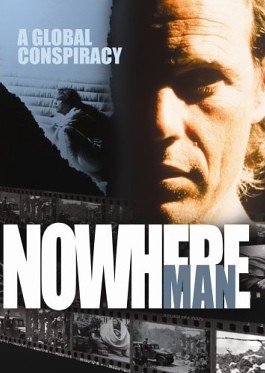
One of the great joys of Netflix is getting to revisit old t.v. obsessions. This past week I've been reliving one of my favorite shows from the mid 90's, a series called Nowhere Man.
Bruce Greenwood plays Tom Veil, a successful photojournalist. The pilot episode features Veil at his first art opening and the center of his art show is a piece called "Hidden Agenda", a photograph he took in South America of an political execution. Veil's wined and dined by art critics and buyers, and, at least for the evening, is toast of the town. Of course, following Miss L's rule of drama whenever things are going too well it means something bad is about to happen.
Veil and his wife go to dinner to celebrate Veil's newfound artistic success. Midway through the meal Veil gets up to use the restroom---and sneak a few drags from a cigarette--- and he returns to find his wife missing. He questions the owner of the restaurant, who claims to not even remember him or his wife. Veil makes his way home only to find his wife with another man and claiming not to recognize Veil. Not knowing what else to do he returns to his studio to figure out what's going on.
He learns that someone wants the negatives of "Hidden Agenda" and Veil refuses. He's captured, imprisoned and, by the end of episode, finally escapes. The episodes that follow work like a dramatic dance as Veil tries to keep from being caught while also attempting to unearth clues to identity of the people who destroyed his life.
It mines some of the same grand conspiracy material as the X-Files. The nameless villains were not only able to erase every trace of Veil's life but they also seem to have control over pieces of the Army, the FBI and even television broadcasts. Not surprisingly, there seems to be a good bit of overlap with staff who worked on both shows, the most obvious being Mark Snow, who did the theme and incidental music for both shows.
It was a perfect cult show because it was one of those shows where you never really knew exactly what was going on. Characters and plot points from past episodes reappear, but in new ways causing you to continually question whatever assumptions you made about the show previously. Back in the day I kept a notebook filed with clues the show, and I even trolled usenet to find more clues (this was in '95, well before every t.v. show had its own message board). The series ended after 25 episodes, which let down the fans since nothing really got answered. I always wondered what the full story was and was excited to see the DVD's available. I've been enjoying them all week.
Unfortunately, I've also watched some of the DVD extras. One of them features an interview with series creator/producer Larry Hertzog. He admits a strong influence from earlier t.v. shows like The Fugitive and The Prisoner (which I really need to watch someday), but also went into some things that were a little disappointing. He said he didn't know who the ultimate villains were and that he didn't think it was important to the show. He never thought of it as a show with an endpoint, but more as an ensemble show like The Twilight Zone where writers and directors could come in and play with odd ideas. The only common threads were the character of Veil and that each episode explored a different type of paranoia.
I almost didn't believe him. It always felt like there was a larger story behind the scenes and it's too bad to discover there really wasn't. I'm apparently not alone in this since sites like Nowhereman.org host a fair amount of fan-fic. Someone with a sense of humor has even given Veil his own myspace page.
Possibly a larger story would have formed if the series had been given more time. Or maybe not. But whatever the case it's all made me think about writing and living up to the full premise of what you create. When you don't manage to do that you fail the story and you fail the audience. I, of course, also thought about one of my current favorite shows, Lost, and all the layers upon layers of unanswered questions the show still has. At one point I thought there had to be a master plan behind everything but now I wonder.
In the end it might be best that Nowhere Man never reached an endpoint. If it had, the paranoia would have ended. Instead fans can still think of Veil out there wandering, questioning and struggling to find the answers. In a way a nice, albeit dark, metaphor for life.
Excelsior.
Bruce Greenwood plays Tom Veil, a successful photojournalist. The pilot episode features Veil at his first art opening and the center of his art show is a piece called "Hidden Agenda", a photograph he took in South America of an political execution. Veil's wined and dined by art critics and buyers, and, at least for the evening, is toast of the town. Of course, following Miss L's rule of drama whenever things are going too well it means something bad is about to happen.
Veil and his wife go to dinner to celebrate Veil's newfound artistic success. Midway through the meal Veil gets up to use the restroom---and sneak a few drags from a cigarette--- and he returns to find his wife missing. He questions the owner of the restaurant, who claims to not even remember him or his wife. Veil makes his way home only to find his wife with another man and claiming not to recognize Veil. Not knowing what else to do he returns to his studio to figure out what's going on.
He learns that someone wants the negatives of "Hidden Agenda" and Veil refuses. He's captured, imprisoned and, by the end of episode, finally escapes. The episodes that follow work like a dramatic dance as Veil tries to keep from being caught while also attempting to unearth clues to identity of the people who destroyed his life.
It mines some of the same grand conspiracy material as the X-Files. The nameless villains were not only able to erase every trace of Veil's life but they also seem to have control over pieces of the Army, the FBI and even television broadcasts. Not surprisingly, there seems to be a good bit of overlap with staff who worked on both shows, the most obvious being Mark Snow, who did the theme and incidental music for both shows.
It was a perfect cult show because it was one of those shows where you never really knew exactly what was going on. Characters and plot points from past episodes reappear, but in new ways causing you to continually question whatever assumptions you made about the show previously. Back in the day I kept a notebook filed with clues the show, and I even trolled usenet to find more clues (this was in '95, well before every t.v. show had its own message board). The series ended after 25 episodes, which let down the fans since nothing really got answered. I always wondered what the full story was and was excited to see the DVD's available. I've been enjoying them all week.
Unfortunately, I've also watched some of the DVD extras. One of them features an interview with series creator/producer Larry Hertzog. He admits a strong influence from earlier t.v. shows like The Fugitive and The Prisoner (which I really need to watch someday), but also went into some things that were a little disappointing. He said he didn't know who the ultimate villains were and that he didn't think it was important to the show. He never thought of it as a show with an endpoint, but more as an ensemble show like The Twilight Zone where writers and directors could come in and play with odd ideas. The only common threads were the character of Veil and that each episode explored a different type of paranoia.
I almost didn't believe him. It always felt like there was a larger story behind the scenes and it's too bad to discover there really wasn't. I'm apparently not alone in this since sites like Nowhereman.org host a fair amount of fan-fic. Someone with a sense of humor has even given Veil his own myspace page.
Possibly a larger story would have formed if the series had been given more time. Or maybe not. But whatever the case it's all made me think about writing and living up to the full premise of what you create. When you don't manage to do that you fail the story and you fail the audience. I, of course, also thought about one of my current favorite shows, Lost, and all the layers upon layers of unanswered questions the show still has. At one point I thought there had to be a master plan behind everything but now I wonder.
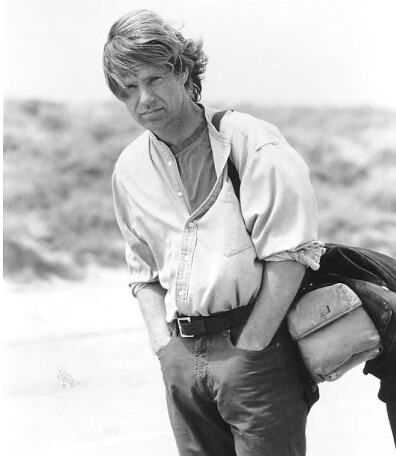
In the end it might be best that Nowhere Man never reached an endpoint. If it had, the paranoia would have ended. Instead fans can still think of Veil out there wandering, questioning and struggling to find the answers. In a way a nice, albeit dark, metaphor for life.
Excelsior.
Friday, October 27, 2006
When Ethics Slips In
The story I've been working on the past few weeks is a sf/horror rewrite of the Poe classic "The Masque of Red Death". I have it in the back of my head to do a full collection of Poe rewrites at some point, and I started with this one because I think it's one of Poe's weaker stories. I love the basic concept of the story and the allegory quality it has, but so much of the tale is told not shown. Aside from changing the setting and a lot of the surrounding circumstances, I'm trying to crack it open and impart a lot of the same type of information through scenes instead of narration. For the most part, I've really only been striving for creepy horror story about a disease destroying the population of Earth, but somewhere along the line metafiction and my recent forays into ethics have slipped in.
One little trick I often do when I just need to figure out the real subtext for a story is to stick two characters who are completes opposites in a room together and see what happens. In this story, those two are prince and the nut who comes to the part dressed as a plague victim. I've been working on the exchange between the two the last few days, mostly scribbles on scraps of paper when I had a quiet moment at work. I just finished typing it up, and somehow I eneded up with a four page debate between the two over the purpose of art. Not really sure where it came from, except from the ethics books I've been reading lately (particularly John Gardner's On Moral Fiction. Somehow I need to compact the four pages down to about 1/4 of a page. 1/2 a page at the most. We'll see how it goes.
Completely unrelated, but I finally bit the bullet and upgraded to the new Blogger Beta. Over the next few days, I'll be backtracking through all my old posts to add the meta-tags. It'll be tedious, but they aren't much use if they aren't used for everything I've written here.
Excselsior
One little trick I often do when I just need to figure out the real subtext for a story is to stick two characters who are completes opposites in a room together and see what happens. In this story, those two are prince and the nut who comes to the part dressed as a plague victim. I've been working on the exchange between the two the last few days, mostly scribbles on scraps of paper when I had a quiet moment at work. I just finished typing it up, and somehow I eneded up with a four page debate between the two over the purpose of art. Not really sure where it came from, except from the ethics books I've been reading lately (particularly John Gardner's On Moral Fiction. Somehow I need to compact the four pages down to about 1/4 of a page. 1/2 a page at the most. We'll see how it goes.
Completely unrelated, but I finally bit the bullet and upgraded to the new Blogger Beta. Over the next few days, I'll be backtracking through all my old posts to add the meta-tags. It'll be tedious, but they aren't much use if they aren't used for everything I've written here.
Excselsior
Tuesday, September 19, 2006
Ethics and Art
I apologize for the scatter-brain nature of this post. This issue is new to me, and I'm still exploring my thoughts. Any comments are welcome and appreciated.
I signed up for the ethics class this term with the expectation that it would push me and my thoughts in directions I'm not used to going. So far, it hasn't been a disappointment. We've read things by Rilke, Sappho, St. Augustine, Martin Luther King, Jr, and the United Nations. Two key things seem to pop out of virtually everything we read and discuss.
1. Ethics develops out of contemplative thought both prior to and following your own actions.
2. Rights are not granted by a government, a religion or any other instituion. Each and every person needs to be viewed as an equal in regards to rights and the level of respect they should receive.
Which all makes sense in a touchy-feely, happy-go-lucky kind of way. It's nice to theorize about, but difficult to put into practice within your own life. Since the class started I've found myself questioning how I view people and why. I've also been writing a lot more in my journal.
One of the key documents we've read is "Towards a Global Ethic", put out by the Council for a Parliament of the World's Religions. There core purpose is to push for a system of rights based around the religions of the world, to create a recognized system for institutions to follow not matter what God, or Gods, they believe in---or even don't believe in.
The document reads like a legal document. It begins by listing the rights each and every person has just for being alive, and then breaks down the responsibilities different facets of society has to uphold the balance of rights. Things like the right to the best education possible, the right to own property, the right to raise a family are all key points that are clearly explored. But one short paragraph above all continues to stick with me.
For artists, writers and scientists, to whom we trust artistic and academic freedom. They are not exempt from general, ethical standards and must serve the truth.
The obvious angle of these two short sentences is simple: don't purposefully lie. But I don't know if it's enough to stop there. Artist need to seek out the truth and express it however best they can. This can take many forms...showing examples of inequalities in the world, showing methods for improving mankind and the world around them, or even just creating quiet beauty to bring calm contemplation to those willing to slow down enough to experience it.
Is it enough to write material that's just fun and entertaining? The piece I'm working on now is basically an sf/horror rewrite of the Poe classic "The Masque of Red Death". If I get this one to work, I actually have it in the back of my head that I should do a full collection of Poe rewrites. But if the pieces aren't about anything, if they aren't challenging pieces of the world that I see and feel are wrong do I have any business writing them down? A month ago I would have said sure, no problem. But now I'm not so sure.
We'll be doing a lot more reading over the term, but to help myself along I checked out the John Gardner classic On Moral Fiction from the library today. While I don't expect Gardner to give me all the answers I'm searching for, I hope he will at least help me start asking and exploring some better questions.
Excelsior
I signed up for the ethics class this term with the expectation that it would push me and my thoughts in directions I'm not used to going. So far, it hasn't been a disappointment. We've read things by Rilke, Sappho, St. Augustine, Martin Luther King, Jr, and the United Nations. Two key things seem to pop out of virtually everything we read and discuss.
1. Ethics develops out of contemplative thought both prior to and following your own actions.
2. Rights are not granted by a government, a religion or any other instituion. Each and every person needs to be viewed as an equal in regards to rights and the level of respect they should receive.
Which all makes sense in a touchy-feely, happy-go-lucky kind of way. It's nice to theorize about, but difficult to put into practice within your own life. Since the class started I've found myself questioning how I view people and why. I've also been writing a lot more in my journal.
One of the key documents we've read is "Towards a Global Ethic", put out by the Council for a Parliament of the World's Religions. There core purpose is to push for a system of rights based around the religions of the world, to create a recognized system for institutions to follow not matter what God, or Gods, they believe in---or even don't believe in.
The document reads like a legal document. It begins by listing the rights each and every person has just for being alive, and then breaks down the responsibilities different facets of society has to uphold the balance of rights. Things like the right to the best education possible, the right to own property, the right to raise a family are all key points that are clearly explored. But one short paragraph above all continues to stick with me.
For artists, writers and scientists, to whom we trust artistic and academic freedom. They are not exempt from general, ethical standards and must serve the truth.
The obvious angle of these two short sentences is simple: don't purposefully lie. But I don't know if it's enough to stop there. Artist need to seek out the truth and express it however best they can. This can take many forms...showing examples of inequalities in the world, showing methods for improving mankind and the world around them, or even just creating quiet beauty to bring calm contemplation to those willing to slow down enough to experience it.
Is it enough to write material that's just fun and entertaining? The piece I'm working on now is basically an sf/horror rewrite of the Poe classic "The Masque of Red Death". If I get this one to work, I actually have it in the back of my head that I should do a full collection of Poe rewrites. But if the pieces aren't about anything, if they aren't challenging pieces of the world that I see and feel are wrong do I have any business writing them down? A month ago I would have said sure, no problem. But now I'm not so sure.
We'll be doing a lot more reading over the term, but to help myself along I checked out the John Gardner classic On Moral Fiction from the library today. While I don't expect Gardner to give me all the answers I'm searching for, I hope he will at least help me start asking and exploring some better questions.
Excelsior
Sunday, September 03, 2006
Random Rilke
I'm out of town for the holiday weekend. Unlike most I'm not dodging Seagulls at Ocean City or falling asleep at Bethany, but living it up somewhere deep in New Jersey for a wedding. Not mine, I promise. I would have written something a little more about it before now if I was getting married.
During my travels up above the Mason-Dixon line, I've been reading the first assignment for my Library Ethics class: it's a teeny little book called Letters to a Young Poet by Rilke. How I've missed this little gem for so long I'll never know. Essentially, it's a series of ten short letters to an aspiring poet who attended the same millitary academy Rilke did. It's easy to read, very conversational, and, like Rilke's poetry, filled with little nuggets of wisdom for artists specifically, but also for people in general.
You are so young, so before all beginning, and I want to beg you, as much as I can, dear sir, to be patient toward all that is unsolved in your heart and to try to love the questions themselves like locked rooms and like books that are written in a very foreign tongue. Do not now seek the answers, which cannot be given you because you would not be able to live them. And the point is, to live everything now. Live the questions.
This is, I'm guessing, one of the key points for our class. To begin asking those big questions we're all too often afraid to confront. But it's a great point for any writer. Not so much what does my story, my essay, my poem answer but what does it ask? What journey can it send its reader onto that they will never forget? Thath for me is the difference between a book that's a good read and a book that's a great work of art. All good works find a way to do this, and I don't think it's something that can really be taught. You either learn it on your own or you never learn it. I just need to figure out how for myself.
Hope everyone enjoys the holiday.
Excelsior.
During my travels up above the Mason-Dixon line, I've been reading the first assignment for my Library Ethics class: it's a teeny little book called Letters to a Young Poet by Rilke. How I've missed this little gem for so long I'll never know. Essentially, it's a series of ten short letters to an aspiring poet who attended the same millitary academy Rilke did. It's easy to read, very conversational, and, like Rilke's poetry, filled with little nuggets of wisdom for artists specifically, but also for people in general.
You are so young, so before all beginning, and I want to beg you, as much as I can, dear sir, to be patient toward all that is unsolved in your heart and to try to love the questions themselves like locked rooms and like books that are written in a very foreign tongue. Do not now seek the answers, which cannot be given you because you would not be able to live them. And the point is, to live everything now. Live the questions.
This is, I'm guessing, one of the key points for our class. To begin asking those big questions we're all too often afraid to confront. But it's a great point for any writer. Not so much what does my story, my essay, my poem answer but what does it ask? What journey can it send its reader onto that they will never forget? Thath for me is the difference between a book that's a good read and a book that's a great work of art. All good works find a way to do this, and I don't think it's something that can really be taught. You either learn it on your own or you never learn it. I just need to figure out how for myself.
Hope everyone enjoys the holiday.
Excelsior.
Thursday, July 27, 2006
My New Experiment
Lately I've been really dissatisified with my fiction writing. Particularly my descriptions of people. For whatever reason, they seem weighed down by surface details and severely lacking in anything else. So I started a new daily project, for any day I'm working at the library.
1. Before leaving for work, pull a number out of a hat. This number is the library patron I will write about. Meaning if I draw 19, the 19th patron I help will be my subject for the day.
2. Spend no more than 10 minutes jotting down notes on the subject.
3. Start with, but don't limit myself to, physical details. If I noticed the patron before helping him/her, include those details as well. If helpful write about what help they needed (ie what books they checked out, needed a library card, etc). Feel free to make inferences and guesses on the subject's personality and history based on appearance, demeanor, etc. The use of dialogue is encouraged but not required.
4. If I help multiple people at the same time---ie checking out books for a mom with two kids---I may write about the entire group but the focus should be whoever hands me the library card or directly asks me for assistance. In the event I can't determine who the subject is, flip a coin.
5. The end product should be between 50 and 100 words. Edit and modify as needed to make it readable.
The rules might be altered slightly as I go, but I doubt by very much. I want to keep the choice of who I write about relatively random. It's easier to write about colorful characters---the wacky ones who are so much easier to write about. This exercise is partly about writing about normal people and making them interesting and distinctive. We'll see how it goes. If any turn out unusually well, I might post them.
Excelsior.
1. Before leaving for work, pull a number out of a hat. This number is the library patron I will write about. Meaning if I draw 19, the 19th patron I help will be my subject for the day.
2. Spend no more than 10 minutes jotting down notes on the subject.
3. Start with, but don't limit myself to, physical details. If I noticed the patron before helping him/her, include those details as well. If helpful write about what help they needed (ie what books they checked out, needed a library card, etc). Feel free to make inferences and guesses on the subject's personality and history based on appearance, demeanor, etc. The use of dialogue is encouraged but not required.
4. If I help multiple people at the same time---ie checking out books for a mom with two kids---I may write about the entire group but the focus should be whoever hands me the library card or directly asks me for assistance. In the event I can't determine who the subject is, flip a coin.
5. The end product should be between 50 and 100 words. Edit and modify as needed to make it readable.
The rules might be altered slightly as I go, but I doubt by very much. I want to keep the choice of who I write about relatively random. It's easier to write about colorful characters---the wacky ones who are so much easier to write about. This exercise is partly about writing about normal people and making them interesting and distinctive. We'll see how it goes. If any turn out unusually well, I might post them.
Excelsior.
Thursday, November 17, 2005
Nano Update
I lost my writing flow the last few days. A few weeks ago I caught a pretty bad head cold, and the cough was still lingering. For some reason last Friday I decided to go running, and I spent the rest of the day hacking up my lungs. That combined with staying up way to late several days in a row caught up with me and got me sick again. So I napped during my lunch hour at work, napped on the metro ride home and went to bed right after dinner every night the last several days.
But I'm feeling more human again. Yesterday I finally got hero #2 to the fantasy world, and I've written a few scenes from the point of view of Clive the talking dog. Now that I'm in the fantasy world I'm going to try to just let my mind go and populate it with some crazy races of creatures. Creatures with spider torsos and human heads. Sentient being who eat through photosynthesis. And the always required Birdmen. Or maybe not, I haven't decided yet.
Today's my day off, and I'll be fine-tuning some book reviews and then trying to crank out 5 pages or so for the NanoNovel. Good luck to any others out there trying to keep pace.
Excelsior.
But I'm feeling more human again. Yesterday I finally got hero #2 to the fantasy world, and I've written a few scenes from the point of view of Clive the talking dog. Now that I'm in the fantasy world I'm going to try to just let my mind go and populate it with some crazy races of creatures. Creatures with spider torsos and human heads. Sentient being who eat through photosynthesis. And the always required Birdmen. Or maybe not, I haven't decided yet.
Today's my day off, and I'll be fine-tuning some book reviews and then trying to crank out 5 pages or so for the NanoNovel. Good luck to any others out there trying to keep pace.
Excelsior.
Friday, November 11, 2005
Nano Update
I hadn't intended to be reading Mieville's collection Looking for Jake as inspiration reading while scrawling out my NanoWriMo entry, but it's kind of turned out that way. I'm really impressed with how he takes an unusual fear or psychosis and makes it reality in his fiction. Probably my favorite story thus far is "Different Skies". The man character is an elderly gent living in London. Teens are getting a bit wilder and the old timer is a bit afraid of them. He has a new window installed in his apartment; by day it's normal but at night one of the panes of glass looks not outside his own home but onto a dark, dirty alleyway. A gang of shadowy kids lurk there in the mysterious alleyway, taunting him with messages in chalk on the walls and tossing rocks at his window. Very odd, very distinctive and very creepy.
My own writing is going ok. As of now, I'm a little shy of 15k words. So I'm actually ahead of schedule for my own goal of 20k words. I'm pretty much ignoring everyone pushing so hard to 50k. Someone in the forum said it best when they said, "NanoWriMo isn't about competing with other writers. It's about competing with yourself and whatever goals you set." Approaching it that way, I feel pretty good about what I'm doing and what I'm writing. It's a big stinking mess at this point, but after everything's laid out I feel pretty sure I can straighten it up a bit after about a thousand edits.
Excelsior.
My own writing is going ok. As of now, I'm a little shy of 15k words. So I'm actually ahead of schedule for my own goal of 20k words. I'm pretty much ignoring everyone pushing so hard to 50k. Someone in the forum said it best when they said, "NanoWriMo isn't about competing with other writers. It's about competing with yourself and whatever goals you set." Approaching it that way, I feel pretty good about what I'm doing and what I'm writing. It's a big stinking mess at this point, but after everything's laid out I feel pretty sure I can straighten it up a bit after about a thousand edits.
Excelsior.
Friday, November 04, 2005
Nanowrimo: Day 4
My progress so far has been pretty slow, writing a couple hundred words each day. Initially, I hand-write everything. Probably part of why I'm so slow.
I'm not exactly sure what happened, but this afternoon I started typing in what I had so far, expanding and editing a bit as I went along. Somehow I ended up with 4k words. Not sure how I did that. Placed alongside some very speedy writers out there dishing out 5-10k a day, it's not that impressive. But I'm quite pleased with the progress. At that rate, I'll hit around 20k or a little more. A number I'll be pretty happy with for a month's work. The trick will be to keep going after November.
The next chapter will probably be tougher. I now enter the actual fantasy world of my fantasy (there's some hopping back and forth between the "real" world and a fantasy world). I don't have the fantasy world as well thought out as I probably should, so I'll be relying pretty heavily on my inner critic shutting the hell up and the little kid in me letting loose with every weird detail he can muster up. I may be sidetracked here and there by odd real life things as well, but I hope not too much.
I plan on making coffee my best friend over the next few weeks. That's the only way I'll be able to keep up.
Excelsior.
I'm not exactly sure what happened, but this afternoon I started typing in what I had so far, expanding and editing a bit as I went along. Somehow I ended up with 4k words. Not sure how I did that. Placed alongside some very speedy writers out there dishing out 5-10k a day, it's not that impressive. But I'm quite pleased with the progress. At that rate, I'll hit around 20k or a little more. A number I'll be pretty happy with for a month's work. The trick will be to keep going after November.
The next chapter will probably be tougher. I now enter the actual fantasy world of my fantasy (there's some hopping back and forth between the "real" world and a fantasy world). I don't have the fantasy world as well thought out as I probably should, so I'll be relying pretty heavily on my inner critic shutting the hell up and the little kid in me letting loose with every weird detail he can muster up. I may be sidetracked here and there by odd real life things as well, but I hope not too much.
I plan on making coffee my best friend over the next few weeks. That's the only way I'll be able to keep up.
Excelsior.
Saturday, October 29, 2005
Albinism in Literature
With NaNoWriMo right around the corner, I'm cramming in some last minute research before I actually start writing on November 1. Probably not terribly surprising to anyone who reads here even somewhat regularly, the basic plot is a dark fantasy/horror with some light experimental touches. At least that's the hope.
I decided awhile ago that my main character will be an albino. But I want to treat this character differently. Albinos in literature and art are often used as thematic props, with little or no depth and little relation to what ablinism really is. So part of what I want to do is make my character as real as possible, and I'll do that partly by poking fun at some of the other books out there that use albinos in more stereotypical ways. My character is a literature student, so it would be important to him to be aware of all this. Here are the ones I've stumbled across so far:
Albino Knife by Steve Perry
Moby Dick by Herman Melville
The Elric Saga by Michael Moorcock
The Invisible Man by HG Wells
The Stars My Destination by Alfred Bester
The DaVinci Code by Dan Brown
The Likes of Me by Randall Beth Platt
Ghost Boy by Iain Lawrence
I Sent for You Yesterday by John Edgar Wideman
The Dark is Rising by Susan Cooper
Maia by Richard Adams
White Jenna by Jane Yolen
Bulletproof Soul by Steven L. Shrewsbury
Skels by Maggie Dubris
Strangely, I've read most of these over the years. The few I haven't, I'll try to snag at the library. If people know of others, please email me or reply to the post. All help appreciated!
Special thanks to Albinism in Popular Culture.
Excelsior.
I decided awhile ago that my main character will be an albino. But I want to treat this character differently. Albinos in literature and art are often used as thematic props, with little or no depth and little relation to what ablinism really is. So part of what I want to do is make my character as real as possible, and I'll do that partly by poking fun at some of the other books out there that use albinos in more stereotypical ways. My character is a literature student, so it would be important to him to be aware of all this. Here are the ones I've stumbled across so far:
Albino Knife by Steve Perry
Moby Dick by Herman Melville
The Elric Saga by Michael Moorcock
The Invisible Man by HG Wells
The Stars My Destination by Alfred Bester
The DaVinci Code by Dan Brown
The Likes of Me by Randall Beth Platt
Ghost Boy by Iain Lawrence
I Sent for You Yesterday by John Edgar Wideman
The Dark is Rising by Susan Cooper
Maia by Richard Adams
White Jenna by Jane Yolen
Bulletproof Soul by Steven L. Shrewsbury
Skels by Maggie Dubris
Strangely, I've read most of these over the years. The few I haven't, I'll try to snag at the library. If people know of others, please email me or reply to the post. All help appreciated!
Special thanks to Albinism in Popular Culture.
Excelsior.
Subscribe to:
Posts (Atom)