I took me a little longer than it should have, but I finally finished reading Charles Yu's How to Live Safely in a Science Fictional Universe.
Most of the reviews I've seen have focused on the humor and Yu's similarities to Douglas Adams. And while Adams is certainly in this book, I think a stronger influence might be Italo Calvino. A Calvino raised on a steady diet of Star Trek, Star Wars, Heinlein and X-Men comic books, but Calvino nonetheless. The following paragraphs from the book really sum up my thoughts on it:
Time travel was supposed to be fun, it was supposed to be about going to places and having a bunch of adventures. Not hovering over scenes from your own life as a detached observer. Not just lurching from moment to random moment, and never even learning about those moments. (401)
Get back in the box. Set it for home, present day. Go see your mom. Bring your dad. Have dinner, the three of you. Go find The Woman You Never Married and see if she might want to be The Woman You Are Going to Marry Someday. Step out of this box. Pop open the hatch. The forces within the chronohydraulic air lock will equalize. Step out into the world of time and risk and loss again. Move forward, into the empty plane. Find the book you wrote, and read it until the end, but don't turn the last page yet, keep stalling, see how long you can keep expanding the infinitely expandable moment. Enjoy the elastic present, which can accommodate as little or as much as you want to put in there. Stretch it out, live inside it. (459)
I read this as an Ebook through my Ipod touch. The book is filled with footnotes, diagrams and pictures that go along with the narrative. Now these aren't directly in the text, but presented to the reader as an optional hyperlink you can open by pressing with your finger. I've seen the footnote thing with non-fiction titles, but this is the first fiction title I've seen use the Ebook format in this way. Yu even takes an extra step by giving a link to a Youtube video demonstrating a brain experiment on how the human brain acts when it makes specific choices.
A small lightbulb went off in my little brain on how most of this isn't possible in your standard Ereader; it requires a tablet, cell phone or other web-ready device that can handle something more than B&W text and simple pictures. The whole experience reminded me a little of the web-based Hyperfiction texts you'd find at places like Alt-X in the mid to late 90's. It's kind of exciting and I'm really curious to see what a writer with a real formalist/expermentalist bent like Danielewski could do with a tool like an Ereader.
Excelsior
Showing posts with label Experimental Fic. Show all posts
Showing posts with label Experimental Fic. Show all posts
Wednesday, May 11, 2011


Sunday, August 02, 2009
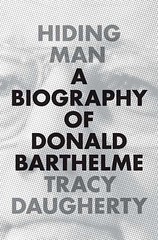
Review: Hiding Man: A Biography of Donald Barthelme
Back in the late 1960's and up through the 1980's, it would have been hard to pick up an issue of the New Yorker that did not contain work or at least a mention of Donald Barthelme. One of the great experimental writers of his day, he also managed to breach through and gain a level of mainstream popularity. Now readers can finally get a thorough look at his often guarded life with Tracy Daugherty's thoughtful and beautifully written biography Hiding Man.
Son of a successful architect, Barthelme grew up in Houston, TX on the fringes of the mainstream literary and artistic world. While there he fell in love with adventure tales like Sabatini's Captain Blood and humor by writers like James Thurber and SJ Perelman. His father pushed him into the more esoteric influences of Surrrealism, Rabelais and others. After a stint in college----Barthelme never actually graduated----he worked for art galleries and as a newspaper man before following his ambitions in his early twenties to become part of the New York writing scene.
What follows after this intro to Barthelme's life is a grand tour of his work and how his life intersected with it. The main trouble with trying to read Barthelme today is that his work---especially his late 60's and early 70's writings----is very much of the time and understanding it today can be difficult. Daughtery carefully lays out the influences----both literary and worldly----making this a must-read volume for anyone who has troubles understanding why we still need to read Barthelme. Daugherty admits early on to his personal history with DB----he was a student of his and seemed to stay in good touch with him afterward----but Daugherty still manages to develop a fairly balanced book by including positive and negative views on Barthelme's life and work.
Hiding Man extends well beyond Barthelme's own writing. Barthelme not only published some innovative fiction but also managed to exercise a profound influence on literature in general through his involvement with P.E.N., various awards committees and teaching. In one way or another he was an influence on Grace Paley, Thomas Pynchon, Vikram Chandra, Philip Lopate, and many many more.
I first discovered Barthelme reading the anthology After Yesterday's Crash; although Barthelme doesn't have any work in the book, he's referred to several times in Larry McCaffery's introduction. From there I picked up used copies of his collections The Teachings of Don B and City Life as well as Snow White, his first and still probably best known novel. Full of lists, Q & A's, strange bits of dialogue and collages that really pushed against the walls of what fiction can be, I loved his work at first. But by the time I got to Snow White I found the ideas behind these tricks and techniques at their best dated and at their worst empty. It's the later sections of Hiding Man that detail Barthelme's writing career and his desire to not just be an iconoclast but also a great writer that I found more interesting. His work becomes more personal with novels like The Dead Father and more outspoken politically with short story collections like Overnight to Many Distant Cities. I'm very curious to give some of these other ideas a try.
Well written and thoughtful, I would recommend this to anyone with an interest in postmodern fiction, literary history or even someone just looking for a unique biography.
Excelsior
Son of a successful architect, Barthelme grew up in Houston, TX on the fringes of the mainstream literary and artistic world. While there he fell in love with adventure tales like Sabatini's Captain Blood and humor by writers like James Thurber and SJ Perelman. His father pushed him into the more esoteric influences of Surrrealism, Rabelais and others. After a stint in college----Barthelme never actually graduated----he worked for art galleries and as a newspaper man before following his ambitions in his early twenties to become part of the New York writing scene.
What follows after this intro to Barthelme's life is a grand tour of his work and how his life intersected with it. The main trouble with trying to read Barthelme today is that his work---especially his late 60's and early 70's writings----is very much of the time and understanding it today can be difficult. Daughtery carefully lays out the influences----both literary and worldly----making this a must-read volume for anyone who has troubles understanding why we still need to read Barthelme. Daugherty admits early on to his personal history with DB----he was a student of his and seemed to stay in good touch with him afterward----but Daugherty still manages to develop a fairly balanced book by including positive and negative views on Barthelme's life and work.
Hiding Man extends well beyond Barthelme's own writing. Barthelme not only published some innovative fiction but also managed to exercise a profound influence on literature in general through his involvement with P.E.N., various awards committees and teaching. In one way or another he was an influence on Grace Paley, Thomas Pynchon, Vikram Chandra, Philip Lopate, and many many more.
I first discovered Barthelme reading the anthology After Yesterday's Crash; although Barthelme doesn't have any work in the book, he's referred to several times in Larry McCaffery's introduction. From there I picked up used copies of his collections The Teachings of Don B and City Life as well as Snow White, his first and still probably best known novel. Full of lists, Q & A's, strange bits of dialogue and collages that really pushed against the walls of what fiction can be, I loved his work at first. But by the time I got to Snow White I found the ideas behind these tricks and techniques at their best dated and at their worst empty. It's the later sections of Hiding Man that detail Barthelme's writing career and his desire to not just be an iconoclast but also a great writer that I found more interesting. His work becomes more personal with novels like The Dead Father and more outspoken politically with short story collections like Overnight to Many Distant Cities. I'm very curious to give some of these other ideas a try.
Well written and thoughtful, I would recommend this to anyone with an interest in postmodern fiction, literary history or even someone just looking for a unique biography.
Excelsior
Sunday, July 19, 2009
New Thoughts on the Avant Garde
I recently finished Tracy Daugherty's wonderful book Hiding Man: A Biography of Donald Barthelme. While I am still digging through my notes and marked passages, one particular quote of Don B keeps coming up:
the function of the advance guard...is to protect the main body, which translates as the status quo
At least for me, this is a different way of thinking about the avant garde side of arts. Blame my binary brain but I often think of the avant garde as an antagonistic force, a side of the arts that seeks to lay waste to everything that came before and define its age through a new style or new philosophy. A session on reading difficult writers I went to at this year's Balticon solidified it for me: when people around the room took turns announcing their favorite authors nearly everyone groaned when one brave man pledged his allegiance to Thomas Pynchon.
But this small line of Bartheleme's hints at more of a symbiosis. Constantly pulling on each other to go one way or another, the two sides need each other to define themselves. Even more, it's the avant garde that steps out to try new forms and new ideas, to take the blasts venomous criticism so more mainstream lit can (possibly) borrow and modify what they do years later.
As a writer who took chances by playing with the form but still managed to publish work in mainstream mags, I can't think of anyone else at a better vantage point than Barthelme to make a statement like this. While this idea is still very fresh in my head----and thus about as firmed up as a pile of silly putt----I'm hoping to mull on it for awhile and start seeing connections the more I read. We'll see.
I'll have more of a formal review of the bio later this week, after I finish going through my note. Until then....
Excelsior
the function of the advance guard...is to protect the main body, which translates as the status quo
At least for me, this is a different way of thinking about the avant garde side of arts. Blame my binary brain but I often think of the avant garde as an antagonistic force, a side of the arts that seeks to lay waste to everything that came before and define its age through a new style or new philosophy. A session on reading difficult writers I went to at this year's Balticon solidified it for me: when people around the room took turns announcing their favorite authors nearly everyone groaned when one brave man pledged his allegiance to Thomas Pynchon.
But this small line of Bartheleme's hints at more of a symbiosis. Constantly pulling on each other to go one way or another, the two sides need each other to define themselves. Even more, it's the avant garde that steps out to try new forms and new ideas, to take the blasts venomous criticism so more mainstream lit can (possibly) borrow and modify what they do years later.
As a writer who took chances by playing with the form but still managed to publish work in mainstream mags, I can't think of anyone else at a better vantage point than Barthelme to make a statement like this. While this idea is still very fresh in my head----and thus about as firmed up as a pile of silly putt----I'm hoping to mull on it for awhile and start seeing connections the more I read. We'll see.
I'll have more of a formal review of the bio later this week, after I finish going through my note. Until then....
Excelsior
Tuesday, November 06, 2007
Review: Dark Reflections by Samuel Delany
I almost decided not to write review of any kind for Samuel Delany's most recent novel, Dark Reflections. Not because I didn't like it---I loved it. But it came out about a year ago and received pretty favorable reviews in both the Washington Post and the New York Times. But the more I dug around for opinions on the book the less I found. Review mags like Rain Taxi, which usually do a good job at picking out works like this, pretty much ignored it. And with the exception of a thoughtful review by Steven Shaviro, most of the comments online are by sf fans who are peeved that it's not an sf novel.
In short, the novel is a biographical portrait of Arnold Hawley, a gay, black poet living in NY City. It's structure is mildly experimental; the novel is broken into three sections, each exploring a different period of his life and moving backwards in time. Each section could easily work as a strong novella, but together they create a moving image of a unique man.
The opening section focuses on his late adult life. Although I could paraphrase it for you, it's probably best to have it laid out in Delany's own words:
In 1987's rainy October, when squirrels stopped, stared, then sprinted along the bench-backs away from the kids with the earrings, combat boots, and dog collars, who for more than fifteen years now had been hanging out in Tompkins Square Park, Arnold's sixth book of poems, Beleaguered Fields, won the Alfred Proctor Prize---an award given once every three years that concerned a small circle of New York poets and men and women of letters. In the late afternoon of the day he received the news, as he walked home through the park, a wind gusted among the wet leaves, for moments making a rising roar, like the cheer of thousands.....Arnold smiled....acknowledging playfully the world's recognition. (3)
The Proctor Prize allows Arnold to quit the civil servant job he hates and take a teaching position at a small college---where he happily works with a small cut in salary. The section moves forward to his retirement years later, and we see Arnold struggle with the odd hypocrisies of the publishing world when he's asked to write a blurb for a young up-and-coming poet putting out work he doesn't respect.
The second section focuses on Arnold's life in his thirties, and his brief marriage to a suicidal homeless woman. The third section moves back further to his late twenties and his early days in college fighting with the realization that he's gay. We see some powerful scenes where he's disturbingly attracted to a well hung but mentally challenged man. Against all better judgement Arnold follows his desire into a run down section of New York, but when he's finally given the opportunity to explore his sexuality he runs away.
Although poetry isn't quite the focus with these other two sections, writing is still a vital part of the story. He meets his wife while writing a poem on a park bench, and we see some lovely moments of his life when he's inspired to write. Much of his daily struggle centers around finding that balance between making a living and following his dream to publish brilliant poems. Arnold is a man who lives, breathes and loves poetry and, although Arnold is very different from Delany, it's hard not to think of Delany himself at these moments.
As much as sex is a part of this novel, Arnold is confoundingly asexual. A number of Delany's books, Hogg especially, are noted for their strong pornographic scenes. Dark Reflections features pimps graphically pitching their wares, poetic descriptions of homo-erotic photography, and a number of other bizarre situations. The moments he gets closest to experiencing sex, something outlandish occurs that puts an end to it: his wife commits suicide, he thinks he's caught in a blackmail scheme, etc, etc. And while we know as readers that Arnold has had sex, we never actually see him having sex. This seems important to the novel somehow, although I'm not quite smart enough to figure out exactly why.
One thing at the novel's core is how Arnold continually explores his identity as a gay, black poet and questions what it means. He's a black man who enjoys country music, and gay man who doesn't pursue sex, and a poet who explores themes beyond the normal bounds of what it means to black and gay. It makes Arnold more than a character; it makes him a human dreaming the dream to be what he can despite the obstacles thrown in front of him. It's this thread of the novel that ties it together, makes everything work, and brings what's probably Delany's most accessible novel in years.
Tor or any other major SF publisher would likely pull a dumptruck full of money to Delany's home if he ever broke down and wrote the SF novel fans of Babel-17 and Stars in My Pocket Like Grains of Sand clamor for. Instead what we get is the novel Delany wanted to write, and a beautiful one it is.
Excelsior
In short, the novel is a biographical portrait of Arnold Hawley, a gay, black poet living in NY City. It's structure is mildly experimental; the novel is broken into three sections, each exploring a different period of his life and moving backwards in time. Each section could easily work as a strong novella, but together they create a moving image of a unique man.
The opening section focuses on his late adult life. Although I could paraphrase it for you, it's probably best to have it laid out in Delany's own words:
In 1987's rainy October, when squirrels stopped, stared, then sprinted along the bench-backs away from the kids with the earrings, combat boots, and dog collars, who for more than fifteen years now had been hanging out in Tompkins Square Park, Arnold's sixth book of poems, Beleaguered Fields, won the Alfred Proctor Prize---an award given once every three years that concerned a small circle of New York poets and men and women of letters. In the late afternoon of the day he received the news, as he walked home through the park, a wind gusted among the wet leaves, for moments making a rising roar, like the cheer of thousands.....Arnold smiled....acknowledging playfully the world's recognition. (3)
The Proctor Prize allows Arnold to quit the civil servant job he hates and take a teaching position at a small college---where he happily works with a small cut in salary. The section moves forward to his retirement years later, and we see Arnold struggle with the odd hypocrisies of the publishing world when he's asked to write a blurb for a young up-and-coming poet putting out work he doesn't respect.
The second section focuses on Arnold's life in his thirties, and his brief marriage to a suicidal homeless woman. The third section moves back further to his late twenties and his early days in college fighting with the realization that he's gay. We see some powerful scenes where he's disturbingly attracted to a well hung but mentally challenged man. Against all better judgement Arnold follows his desire into a run down section of New York, but when he's finally given the opportunity to explore his sexuality he runs away.
Although poetry isn't quite the focus with these other two sections, writing is still a vital part of the story. He meets his wife while writing a poem on a park bench, and we see some lovely moments of his life when he's inspired to write. Much of his daily struggle centers around finding that balance between making a living and following his dream to publish brilliant poems. Arnold is a man who lives, breathes and loves poetry and, although Arnold is very different from Delany, it's hard not to think of Delany himself at these moments.
As much as sex is a part of this novel, Arnold is confoundingly asexual. A number of Delany's books, Hogg especially, are noted for their strong pornographic scenes. Dark Reflections features pimps graphically pitching their wares, poetic descriptions of homo-erotic photography, and a number of other bizarre situations. The moments he gets closest to experiencing sex, something outlandish occurs that puts an end to it: his wife commits suicide, he thinks he's caught in a blackmail scheme, etc, etc. And while we know as readers that Arnold has had sex, we never actually see him having sex. This seems important to the novel somehow, although I'm not quite smart enough to figure out exactly why.
One thing at the novel's core is how Arnold continually explores his identity as a gay, black poet and questions what it means. He's a black man who enjoys country music, and gay man who doesn't pursue sex, and a poet who explores themes beyond the normal bounds of what it means to black and gay. It makes Arnold more than a character; it makes him a human dreaming the dream to be what he can despite the obstacles thrown in front of him. It's this thread of the novel that ties it together, makes everything work, and brings what's probably Delany's most accessible novel in years.
Tor or any other major SF publisher would likely pull a dumptruck full of money to Delany's home if he ever broke down and wrote the SF novel fans of Babel-17 and Stars in My Pocket Like Grains of Sand clamor for. Instead what we get is the novel Delany wanted to write, and a beautiful one it is.
Excelsior
Sunday, November 12, 2006
Review: Only Revolutions
About six years ago Mark Danielewski put out one hell of a first novel called House of Leaves. Blending pieces of horror and pomo fiction, it delivered complicated techniques and ideas in ways that were very accessible. The novel became more than a cult following; it became a NY Times bestseller. Despite it’s accomplishments, HoL wears its influences like tattoos on sleeveless arms: Lovecraft, Straub, Delaney and especially Borges. It was easy to see where Danielewski’s ideas and styles were coming from.
His new novel Only Revolutions is quite different. While there are certainly influences that show through----WS Burroughs, EE Cummings, Walt Whitman, Jack Kerouac----OR feels more like his own book, like Danielsewski’s managed to cover up all the seams and make the material and concepts really his own. Unlike most reviews that focus on plot, this one inevitably has to focus on other concerns like style, concept and structure. So be forewarned. I write very little about what actually happens in the book plot-wise in and when I do, I do it without caring about giving things away like I normally would. Because, honestly, in a book like this it really doesn’t matter.
But what is the book about, you might ask?
In short, Sam and Hailey are two wild souls who meet and fall in love with each other. They circumnavigate the U.S. together in true road novel fashion, blasting down highways and dirt roads with complete abandon, caring little about anything save the thrill of speed and jars of honey the carry around for sustenance. Through the magic of fiction both characters remain sixteen years old forever, removing any sense of responsibility from them and imbuing them with an overpowering sense of freedom. The main conceit of the tale is that Sam and Hailey exist in different points in time; Sam’s story begins with the Civil War while Hailey’s opens with the assassination of JFK. The story is told from both points of view. Following the publisher’s forward, eight pages of Sam’s story are to be read first, then the volume needs to be flipped over and upside down and read in reverse for Hailey’s story.
This flip-flopping between time periods creates connections between events in time---all listed as marginalia---hinting at similarities between events occurring around the two main characters. The Civil War and the JFK assassination, for example, were both times of great political, cultural and societal change and linking these two events separated by 100 years suggests a cyclical progression to our nation. Danielewsi makes great use of dialects and cultural references of each period, and at times even mimics voices of writers from the day. Sam’s story, for example, starts in a lilting poetic voice that reminded me a lot of Walt Whitman. When we get to the 40’s and 50’s, the language is more jumpy and recalls beat poets and early rock and roll lyrics. I found, quite by accident, that it’s a novel that works much better when read aloud (although with all the sex I don’t suggest reading it aloud on the metro).
It’s a structural masterpiece, with most of the structural conceits referencing circles. What occurs in Sam’s story on page eight also occurs on page eight of Hailey’s story, but with her own perspective and in her own time with its own cultural references giving a back-and-forth, spinning around feeling with the novel. The letter “O” is highlighted in different colors throughout the book, and there are constant references in the text to cyclones, tornados, gyres and twisters. If you choose to disregard the publisher’s suggestion and read Sam’s story straight through, when things end you’ll also find yourself back at the beginning when Hailey’s story starts on the last page of Sam’s. Even the act of physically flipping the book back and forth has an inherent circular motion. The book is precisely 360 pages long, equal to the number of degrees in a circle. Although the prose at first might seem loose and very WS Burroughs, it’s actually very controlled. Each segment on each page---meaning each half page---has exactly 90 words. After you’ve read each eight-page segment you’ve read 720 words and made yourself spin around two full times.
Much of the structure that happened in HoL---the intersecting storylines and the marginalia---could have been done in hypertext. I remember thinking as I read it that it probably should have been done in hypertext and that Danielewski put it into a standard novel form to sell it. But OR stresses the book as a physical artifact: the pages, the cover, the text. Each time you flip the book over to read the other side of the story D doesn’t just remind you that you are reading a book but forces you to interact with it. Book-ribbons to help mark your place in both storylines are not only helpful but increase the physical interaction with the book.
There are a few parts of the story that slowed down for me. For some reason I have yet to figure out, the two spend an inordinate amount of time working in a diner in St. Louis. With all the constant wild motion, they suddenly seemed trapped standing still for so long. From St. Louis they bounce through court-houses trying to get married---remember they are always sixteen---and ultimately get lost in the mountains during an ice storm. The last thirty pages are particularly powerful as we flip the book back and forth, seeing and feeling the reactions of Sam and Hailey as they see their loved one freeze to death in their arms.
I don’t know if my review here does the book justice. In fact, my thoughts on it probably muddle Danielewski’s skill more than enlighten it. Taken individually the techniques he uses are not particularly new; I’ve seen most if not all of them done before in poetry and experimental short fiction. But he stretches these techniques to the limit by applying them to a novel and creates a new fictional experience. OR is a novel that’s bound to launch the academic careers of many a literary theorist as they sit down to interpret everything Danielewski is doing.
If all of this sounds confusing to you, parts of it are. If you are a reader who looks only for the familiar, this is not the book for you. If, however, you are like me and enjoy being truly surprised by a writer’s invention I suggest picking it up for yourself. Ride along with Sam and Hailey. Run with them, revolve with them, forget any preconceptions of what fiction should be and enjoy the freedom of reading something entirely new.
Excelsior.

His new novel Only Revolutions is quite different. While there are certainly influences that show through----WS Burroughs, EE Cummings, Walt Whitman, Jack Kerouac----OR feels more like his own book, like Danielsewski’s managed to cover up all the seams and make the material and concepts really his own. Unlike most reviews that focus on plot, this one inevitably has to focus on other concerns like style, concept and structure. So be forewarned. I write very little about what actually happens in the book plot-wise in and when I do, I do it without caring about giving things away like I normally would. Because, honestly, in a book like this it really doesn’t matter.
But what is the book about, you might ask?
In short, Sam and Hailey are two wild souls who meet and fall in love with each other. They circumnavigate the U.S. together in true road novel fashion, blasting down highways and dirt roads with complete abandon, caring little about anything save the thrill of speed and jars of honey the carry around for sustenance. Through the magic of fiction both characters remain sixteen years old forever, removing any sense of responsibility from them and imbuing them with an overpowering sense of freedom. The main conceit of the tale is that Sam and Hailey exist in different points in time; Sam’s story begins with the Civil War while Hailey’s opens with the assassination of JFK. The story is told from both points of view. Following the publisher’s forward, eight pages of Sam’s story are to be read first, then the volume needs to be flipped over and upside down and read in reverse for Hailey’s story.

Page 8, Sam's Story
This flip-flopping between time periods creates connections between events in time---all listed as marginalia---hinting at similarities between events occurring around the two main characters. The Civil War and the JFK assassination, for example, were both times of great political, cultural and societal change and linking these two events separated by 100 years suggests a cyclical progression to our nation. Danielewsi makes great use of dialects and cultural references of each period, and at times even mimics voices of writers from the day. Sam’s story, for example, starts in a lilting poetic voice that reminded me a lot of Walt Whitman. When we get to the 40’s and 50’s, the language is more jumpy and recalls beat poets and early rock and roll lyrics. I found, quite by accident, that it’s a novel that works much better when read aloud (although with all the sex I don’t suggest reading it aloud on the metro).

Page 8, Hailey's Story
It’s a structural masterpiece, with most of the structural conceits referencing circles. What occurs in Sam’s story on page eight also occurs on page eight of Hailey’s story, but with her own perspective and in her own time with its own cultural references giving a back-and-forth, spinning around feeling with the novel. The letter “O” is highlighted in different colors throughout the book, and there are constant references in the text to cyclones, tornados, gyres and twisters. If you choose to disregard the publisher’s suggestion and read Sam’s story straight through, when things end you’ll also find yourself back at the beginning when Hailey’s story starts on the last page of Sam’s. Even the act of physically flipping the book back and forth has an inherent circular motion. The book is precisely 360 pages long, equal to the number of degrees in a circle. Although the prose at first might seem loose and very WS Burroughs, it’s actually very controlled. Each segment on each page---meaning each half page---has exactly 90 words. After you’ve read each eight-page segment you’ve read 720 words and made yourself spin around two full times.
Much of the structure that happened in HoL---the intersecting storylines and the marginalia---could have been done in hypertext. I remember thinking as I read it that it probably should have been done in hypertext and that Danielewski put it into a standard novel form to sell it. But OR stresses the book as a physical artifact: the pages, the cover, the text. Each time you flip the book over to read the other side of the story D doesn’t just remind you that you are reading a book but forces you to interact with it. Book-ribbons to help mark your place in both storylines are not only helpful but increase the physical interaction with the book.
There are a few parts of the story that slowed down for me. For some reason I have yet to figure out, the two spend an inordinate amount of time working in a diner in St. Louis. With all the constant wild motion, they suddenly seemed trapped standing still for so long. From St. Louis they bounce through court-houses trying to get married---remember they are always sixteen---and ultimately get lost in the mountains during an ice storm. The last thirty pages are particularly powerful as we flip the book back and forth, seeing and feeling the reactions of Sam and Hailey as they see their loved one freeze to death in their arms.
I don’t know if my review here does the book justice. In fact, my thoughts on it probably muddle Danielewski’s skill more than enlighten it. Taken individually the techniques he uses are not particularly new; I’ve seen most if not all of them done before in poetry and experimental short fiction. But he stretches these techniques to the limit by applying them to a novel and creates a new fictional experience. OR is a novel that’s bound to launch the academic careers of many a literary theorist as they sit down to interpret everything Danielewski is doing.
If all of this sounds confusing to you, parts of it are. If you are a reader who looks only for the familiar, this is not the book for you. If, however, you are like me and enjoy being truly surprised by a writer’s invention I suggest picking it up for yourself. Ride along with Sam and Hailey. Run with them, revolve with them, forget any preconceptions of what fiction should be and enjoy the freedom of reading something entirely new.
Excelsior.
Subscribe to:
Posts (Atom)